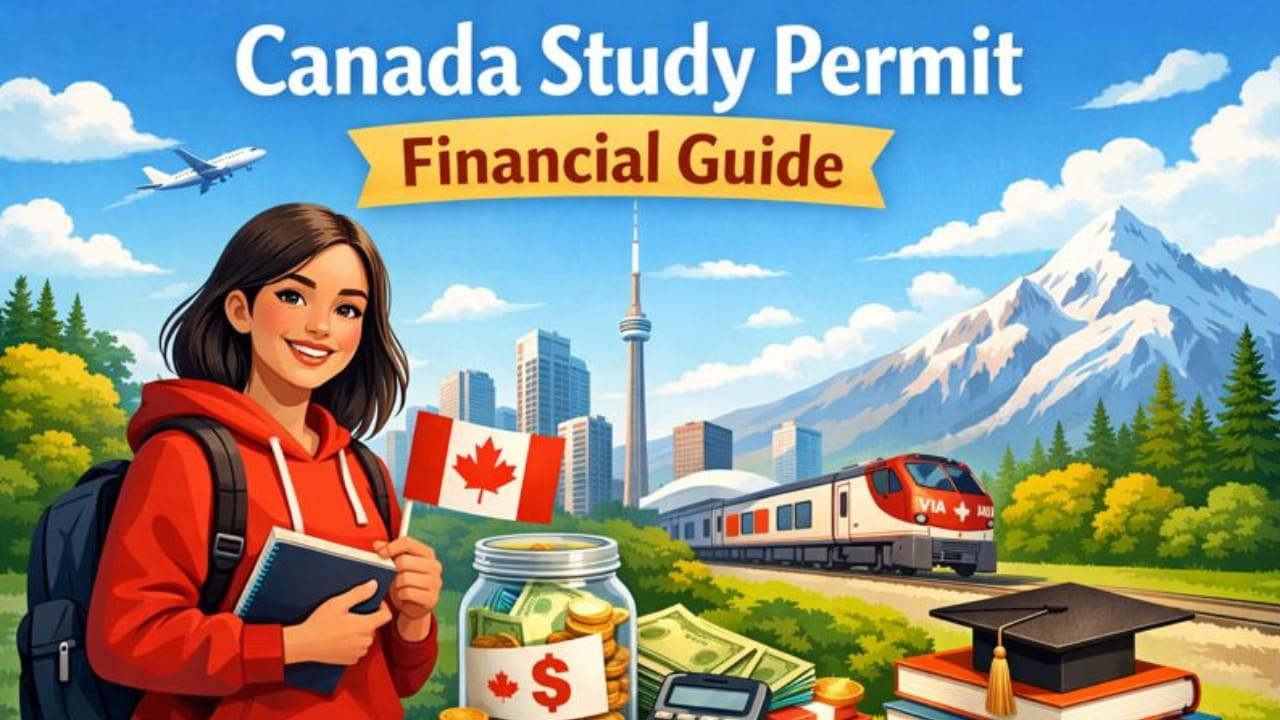
So, you got the acceptance letter. You’ve probably printed it out, framed it, or at least sent a screenshot to your mom. It’s a huge achievement. But now that the celebration is over, the panic of the actual visa application is setting in.
You look at your bank account. Then you look at flight prices to Toronto or Vancouver. Then you look at the IRCC checklist. It’s overwhelming.
"Do I really need to spend $1,500 on a flight ticket right now?" you ask yourself. "What if my visa gets rejected? What is this GIC thing everyone talks about?"
Listen, we get it. The financial side of studying abroad is terrifying. But a lot of what you hear on forums or from "a friend of a friend" is wrong. In this guide, we are going to cut through the noise. We will explain exactly what the Canadian government requires for Proof of Financial Support in 2026, and the truth about whether you actually need a flight ticket to apply.
1. The "Flight Ticket Myth": Do You Need It?
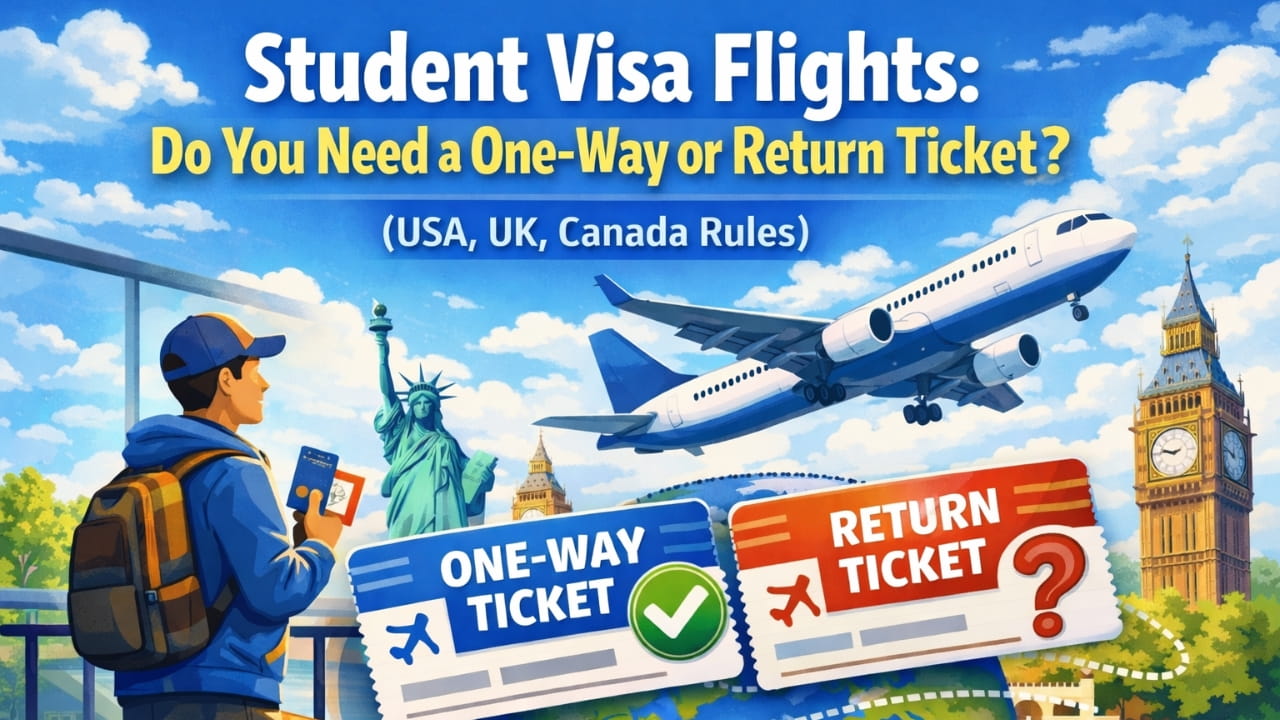
Let's rip the band-aid off: No, you do not need to buy a fully paid flight ticket to apply for your initial study permit.
The Immigration, Refugees and Citizenship Canada (IRCC) document checklist is very specific. While they ask for "Proof of Means of Financial Support," they do not list a "Paid Air Ticket" as a mandatory document. They understand the reality: Visa processing can take anywhere from 3 weeks to 4 months. Forcing students to buy tickets with fixed dates would be unfair.
So, Why Do People Submit It?
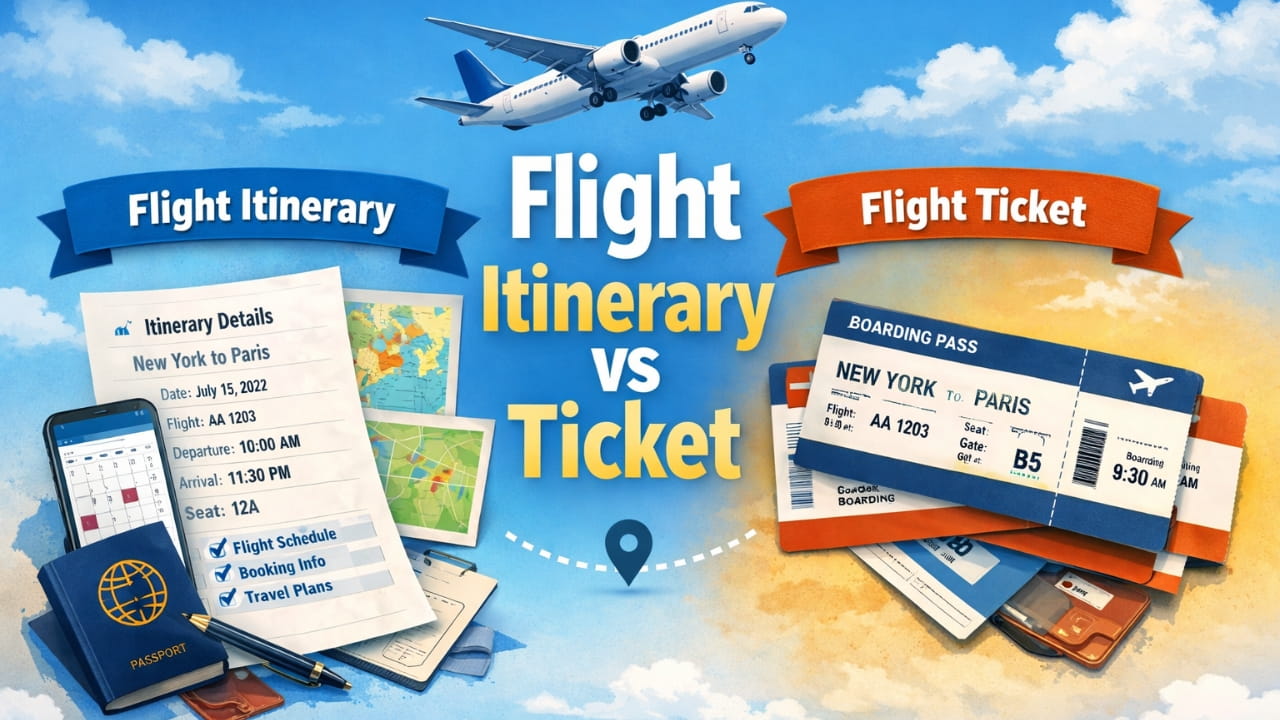
Even though it's not mandatory, many successful applicants attach a Flight Itinerary (Dummy Ticket). Why? Because it helps with the "Intent to Leave" factor.
The Strategy: By showing a reservation for a return flight (especially for 1-year courses), you are subtly telling the officer: "I have a plan. I know when my course ends, and I have looked into flights to go home." It adds a layer of seriousness to your application without costing you $1,500.
Save your cash for your tuition. Use a verifiable flight reservation for the application if you want to strengthen your "travel plan," but focus 99% of your energy on your financial documents.
2. SDS vs. Non-SDS: Which Lane Are You In?
Canada has a two-speed system for student visas. Knowing your lane is critical because the money rules are completely different.
| Feature | SDS (Student Direct Stream) | Non-SDS (General) |
|---|---|---|
| Processing Time | Fast (approx. 20 days) | Slow (can be months) |
| GIC Requirement | Mandatory ($20,635 CAD) | Optional (but recommended) |
| Tuition Payment | Full 1st Year Paid Upfront | Proof of Funds is enough |
| Approval Rate | Higher | Lower |
The GIC Explained: A Guaranteed Investment Certificate (GIC) isn't a fee. It's your money. You deposit $20,635 into a Canadian bank (like CIBC or Scotiabank). When you arrive in Canada, they unlock a small amount ($2,000) immediately, and the rest is paid to you in monthly installments to cover your rent and food. It’s a safety net the government forces you to have.
3. The "Proof of Funds" Math (2026 Update)
This is where most students get rejected. In 2024, Canada doubled the financial requirement to reflect the real cost of living. You cannot use old numbers.
The Magic Formula for Approval:
- Tuition: Let's say your first year is $17,000 CAD.
- Living Expenses: Fixed by the government at $20,635 CAD.
- Travel Costs: Estimate $2,000 CAD for your flight home.
Total Required: You need to show access to roughly $40,000 CAD. If your bank statement shows $30,000, you will likely be rejected for "financial insufficiency," even if you are a brilliant student.
4. The "Source of Funds" Trap
Showing the money isn't enough. You have to prove where it came from. This is a classic trap.
The Scenario: Your uncle transfers $20,000 into your account 3 days before you print your bank statement.
The Officer's Thought: "This isn't their money. They borrowed it just for the visa and will return it next week." REJECTED.
The Fix:
- Show 4 months of bank history.
- If there is a large deposit, attach an affidavit explaining it (e.g., "Sale of Land" or "Education Loan Disbursal Letter").
- Transparency is your best friend.
5. The Role of the SOP (Statement of Purpose)
Your SOP is the only place you can "talk" to the officer. Don't just write about your childhood dreams. Use a paragraph to explain your finances.
"My father, who earns $X annually, is sponsoring my education. We have already paid the first year's tuition ($17,000) and secured a GIC of $20,635 to cover my living expenses. Additionally, our family savings of $X are available for emergencies."
This shows you are organized, financially stable, and not a risk to the Canadian system.
6. When Do You Actually Need a Real Ticket?
Fast forward. You got the visa! (Yay!) Now is when the flight ticket becomes real.
When you land in Canada, you don't just walk out. You go to a secondary room to meet a Border Services Officer (BSO). They are the ones who actually print your Study Permit paper.
They might ask: "When do you plan to leave?"
If you have a one-way ticket, this can be a tricky question. Having a printed flight itinerary (dummy ticket) showing a return date for the summer break or after graduation is a great way to answer this confidently without buying a return seat 2 years in advance.
7. Conclusion: Focus on Finances, Not Flights
Applying for a Canadian study permit is a financial audit, not a travel booking exercise. Don't let the stress of flight tickets distract you from the real work: organizing your bank statements, paying your GIC, and writing a killer SOP.
Your Checklist:
- Pay your 1st year tuition.
- Get your GIC ($20,635).
- Gather 4 months of clear bank statements.
- (Optional) Attach a flight reservation to show travel intent.
Good luck! See you in Canada.
Leave a Comment