
You've gathered your passport, bank statements, and hotel booking. Then comes the one requirement that stops most first-time visa applicants cold: proof of a flight booking. Buy a full ticket before your visa is approved and you risk losing hundreds of dollars if they say no. A dummy ticket solves this — legally, instantly, and exactly the way embassies designed the process.
What Is a Dummy Ticket?
A dummy ticket is a real flight reservation made in your name, on an actual airline, for an operating route. It carries a genuine 6-character PNR (Passenger Name Record) — the same booking reference code used across every airline and travel agency worldwide.
It is not a paid ticket. You cannot board a flight with it. But it exists inside the airline's Global Distribution System (GDS), passes live verification checks, and is precisely the document embassy checklists worldwide describe as a "flight reservation" or "flight itinerary."
The word "dummy" is traveler slang. The official document is a flight reservation — the same format airlines send when any agent holds a seat before full payment is processed.
Why Do Embassies Ask for a Flight Reservation Instead of a Paid Ticket?
Embassies want to verify your travel intent, not your payment history. They need to see a credible entry date, exit date, and route — enough to confirm you plan to leave within your permitted stay.
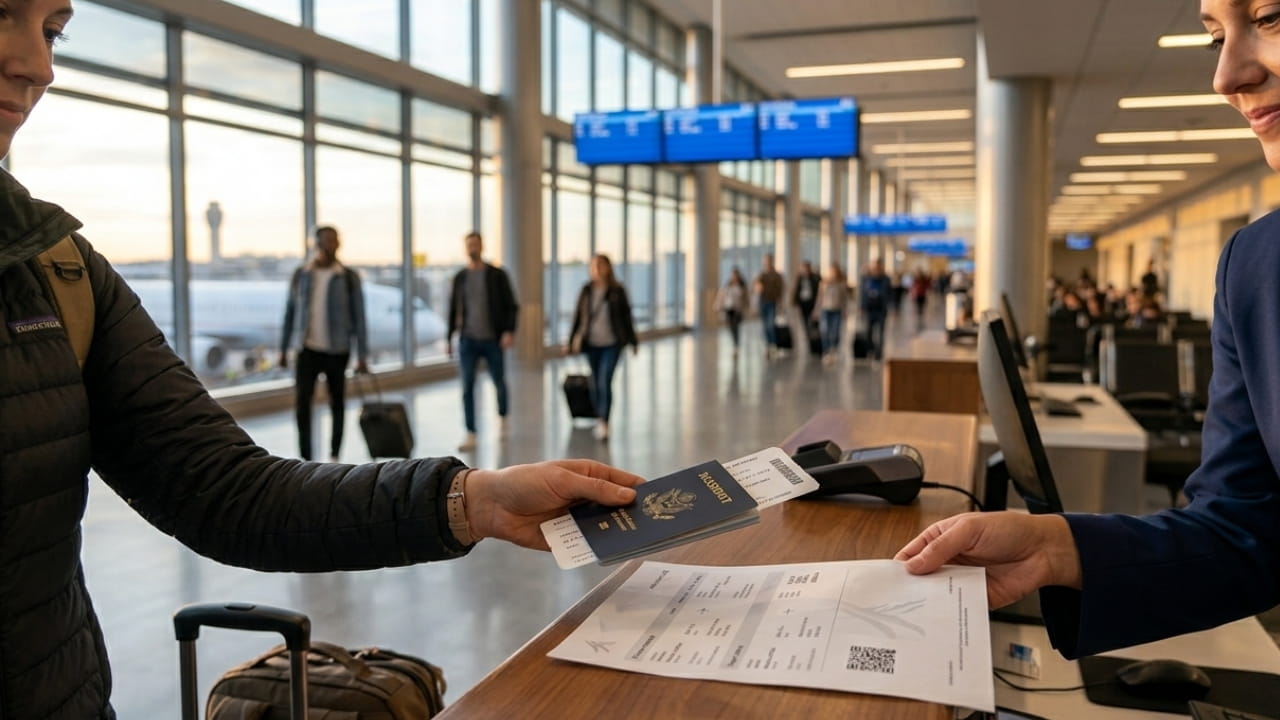
Purchasing a non-refundable ticket before visa approval puts applicants at real financial risk. A round-trip from Delhi to Paris can run ₹60,000–₹1,20,000. If the visa is denied, that money is gone. Most Schengen embassies, VFS Global, and UK Visas and Immigration explicitly advise applicants not to buy tickets before approval for exactly this reason.
The Schengen Visa Code references "a reservation for a return or onward flight." IRCC Canada requires "a travel itinerary." The UK Home Office asks for "proposed travel dates." None of these require a purchased ticket — they require a reservation.
Is a Dummy Ticket Legal?
Yes — completely legal. No country has a law requiring you to purchase a confirmed airline ticket before submitting a visa application.
What is illegal is document fraud: submitting a fabricated PDF with a non-existent PNR, an invented flight number, or a photoshopped confirmation. That constitutes forgery. It fails verification instantly and can result in visa denial, blacklisting, and criminal proceedings.
A legitimate dummy ticket is the opposite of fraud. It is a real reservation in a real system that a consular officer can verify in real time.
| Feature | Legitimate Dummy Ticket | Fake/Fraudulent Ticket |
|---|---|---|
| Flight number | Real, operating airline route | Invented or nonexistent |
| PNR code | Verifiable in airline GDS | Returns "PNR not found" |
| Legal status | Fully legal | Document fraud |
| Embassy outcome | Passes verification | Rejected immediately |
How Does Embassy PNR Verification Work?
Consular officers verify your PNR directly on the airline's official website or through the GDS (Global Distribution System). A genuine reservation returns your name, route, dates, and a "Confirmed" status. A fabricated PNR returns nothing.
"Confirmed" is the correct status for a dummy ticket. It means the seat is reserved in the system. "Ticketed" means full payment has been issued — which embassies specifically advise you not to do before approval.
Officers are not calling airlines to confirm payment. They are checking that the reservation exists and matches your application details. That is the only check a dummy ticket needs to pass — and a legitimate one passes it every time.
Which Visas Accept Dummy Tickets?
Schengen Visa
Every Schengen state requires a flight reservation. Must show a round trip with entry and exit dates matching your planned stay.
Canada Visitor (TRV)
IRCC accepts a travel itinerary as a standard supporting document. Thousands of TRV applicants submit flight reservations.
US B1/B2 Visa
Bringing a round-trip itinerary to your interview demonstrates a clear return plan, which consular officers weigh heavily.
UK Standard Visitor
The Home Office asks for travel arrangements and proposed dates. A properly formatted flight itinerary satisfies this fully.
The Detail Most Blogs Skip: How Your Dummy Ticket Determines Visa Validity
Your dummy ticket does more than clear a checklist. Consular officers read your itinerary dates to decide how long your visa is valid.
If your reservation shows a 10-day trip — arriving June 5, departing June 15 — the consulate typically issues a visa valid for exactly those dates, or slightly beyond. Submit vague or inconsistent dates and you risk receiving a shorter validity window than your trip actually needs.
Your dummy ticket dates must be deliberate and must match your hotel booking, your leave letter, and your bank statement. Inconsistency across documents is the most common reason applications get flagged for additional documentation — not the ticket type.
Multi-Country Trips: Which Consulate Gets Your Application?
For Schengen applications covering multiple countries, your dummy ticket determines which embassy has jurisdiction over your case.
The rule: you apply to the consulate of the country where you spend the most time. If time is equal, apply to your first point of entry. Your flight itinerary is the primary evidence consulates use to make this determination.
How Long Is a Dummy Ticket Valid?
Airlines do not hold reservations indefinitely without payment. Most dummy tickets carry a genuine expiry window from their creation date:
- 24–48 hours — standard for most online providers and direct airline holds
- Up to 72 hours — available from agencies using major GDS platforms (Amadeus, Sabre, Galileo)
- 7–14 days — occasionally available for specific routes and booking conditions
Generate your dummy ticket 1–2 days before your visa appointment, not a week ahead. If processing delays push past the window, a reputable provider re-issues it with a fresh PNR at no extra charge.
Dummy Ticket vs. Refundable Ticket vs. Non-Refundable Ticket
Most comparisons stop at two options. There is a third — refundable tickets — worth understanding before you decide.
| Feature | Dummy Ticket | Refundable Ticket | Non-Refundable Ticket |
|---|---|---|---|
| Upfront cost | Small service fee | Full fare (30–60% premium) | Full fare |
| If visa is denied | Lose only the service fee | Full refund (processing delays vary) | Partial or no refund |
| Financial risk | None | Low-to-moderate | High |
Border Arrival vs. Visa Application: Two Different Scenarios
Visa application — You submit your dummy ticket as part of your pre-travel document package. The embassy reviews it at their pace. This is the primary use case for dummy tickets.
Immigration arrival — Countries like Thailand, Indonesia, and the Philippines may ask for proof of onward travel when you physically arrive. An immigration officer checks that you have a flight out. At a physical border, a dummy ticket with a live, freshly generated PNR typically works, but generate it as close to your arrival as possible and confirm the PNR resolves before you board your inbound flight.
Practical Submission Checklist
Before you attach your dummy ticket to your visa application, confirm these 6 crucial points:
- PNR resolves correctly on the airline's website
- Passenger name matches passport character-for-character
- Travel dates match hotel booking and application form
- Round-trip itinerary included (for tourist/short-stay visas)
- PDF is clear, uncompressed, and fully visible when printed
- Reservation generated within 1–2 days of your appointment
Frequently Asked Questions
A dummy ticket is a real flight reservation with a unique 6-character PNR, generated directly from the airline's booking system. It shows confirmed booking details — your name, route, and flight times — and remains verifiable for 24–72 hours. It is not a paid ticket; it is a verified seat hold used as proof of travel intent for visa applications.
Yes, completely legal. Most embassies explicitly advise against purchasing full tickets before visa approval. A verifiable flight reservation with a live PNR meets their stated requirements. What is illegal is submitting a fabricated document with a fake PNR — that is document fraud.
They use it to verify your travel intent: you have a clear exit plan, your dates align with your application, and your stated destination matches your route. It confirms you are a genuine temporary visitor — not that you have spent money on an actual ticket.
Visa officers enter your 6-character PNR directly on the airline's official website or through the GDS. A genuine reservation returns your name, flight details, and a "Confirmed" status. A fabricated PNR returns no result — and the application is rejected.
"Confirmed" means your seat is reserved in the airline system — exactly what embassies require. "Ticketed" means full payment has been issued and a 13-digit e-ticket number generated — which embassies specifically advise applicants not to do before visa approval. Submit a "Confirmed" reservation.
Most remain valid for 48–72 hours after generation. Always check the expiry on your specific document and generate it 1–2 days before your appointment. A reputable provider re-issues it with a fresh PNR at no charge if your appointment date shifts.
Yes — and you should. Enter your PNR on the airline's official website or on CheckMyTrip immediately after receiving your document. If it doesn't return your name and flight details, the document is not legitimate.
For tourist and short-stay visa applications, embassies require a round-trip reservation. It proves you intend to leave within your permitted stay. One-way reservations are only appropriate for long-stay student or work visa applications. Check your specific embassy's checklist before submitting.
Contact your provider and request a re-issue. A reputable service generates a new reservation with updated dates and a fresh PNR. Never submit an expired reservation — the PNR will fail verification.
A professional dummy ticket carries a real, verifiable PNR from the airline's live booking system. A fake generator produces a PDF with a random reference that returns no result when checked. The latter is document fraud. Use only providers that issue reservations through legitimate GDS channels.
No. The dummy ticket is a placeholder that demonstrates your intended travel plan. Once your visa is approved, book any flight that suits your actual schedule and budget. The reservation served its purpose at the application stage.
Embassies know applicants submit flight reservations rather than paid tickets — and accept this. They check that your PNR is real and your details are consistent, not whether payment has been made. A legitimate dummy ticket passes that check. A fake one does not.
A Global Distribution System (GDS) — such as Amadeus, Sabre, or Galileo — is the global network that connects airlines to travel agents and booking platforms. Any reservation made through a GDS is visible across all systems connected to it. A dummy ticket generated through a GDS is a real reservation; one created outside these systems is not.
Some travel insurance providers require flight details before issuing a policy. A dummy ticket with a live PNR can satisfy this requirement. Check your specific insurer's requirements — some accept a reservation, others require a confirmed booking.
A small number of embassies or specific visa categories may ask for a "confirmed booking" in their checklist, which some officers interpret as a fully paid ticket. When in doubt, contact the embassy or consulate directly to confirm whether a verifiable flight reservation is sufficient before your appointment.
Leave a Comment
Your email address will not be published. Required fields are marked *