
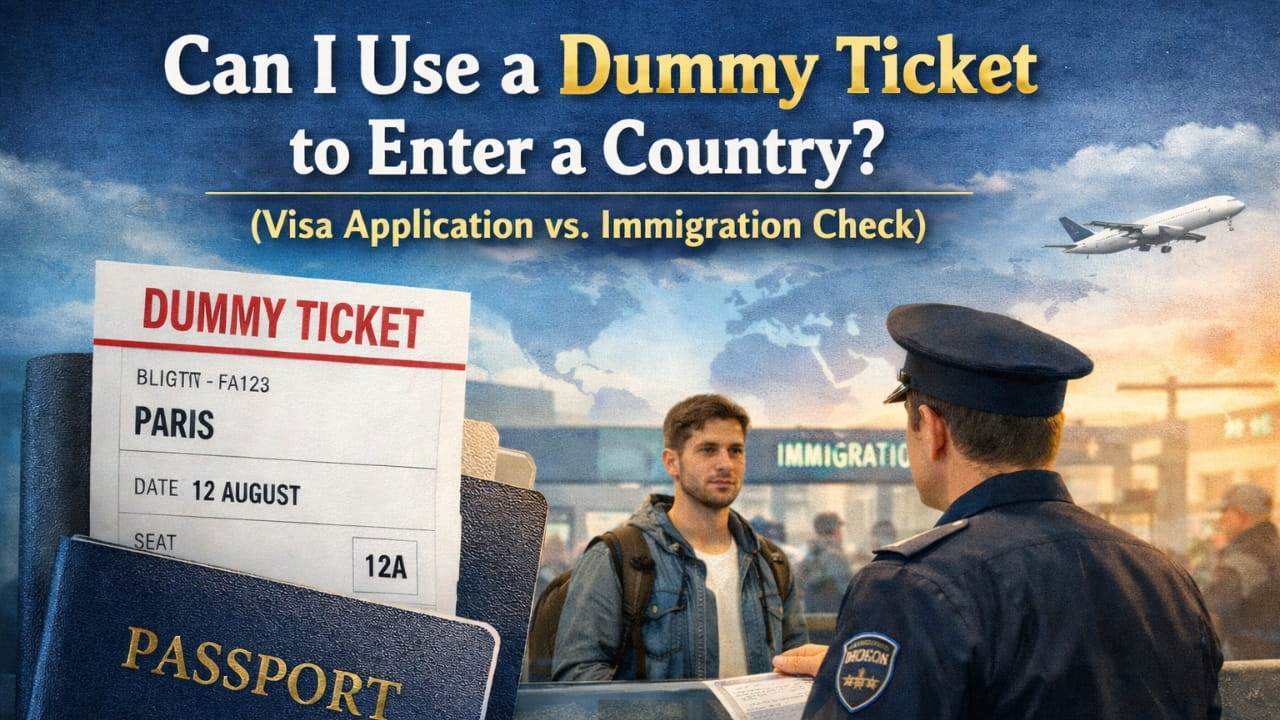
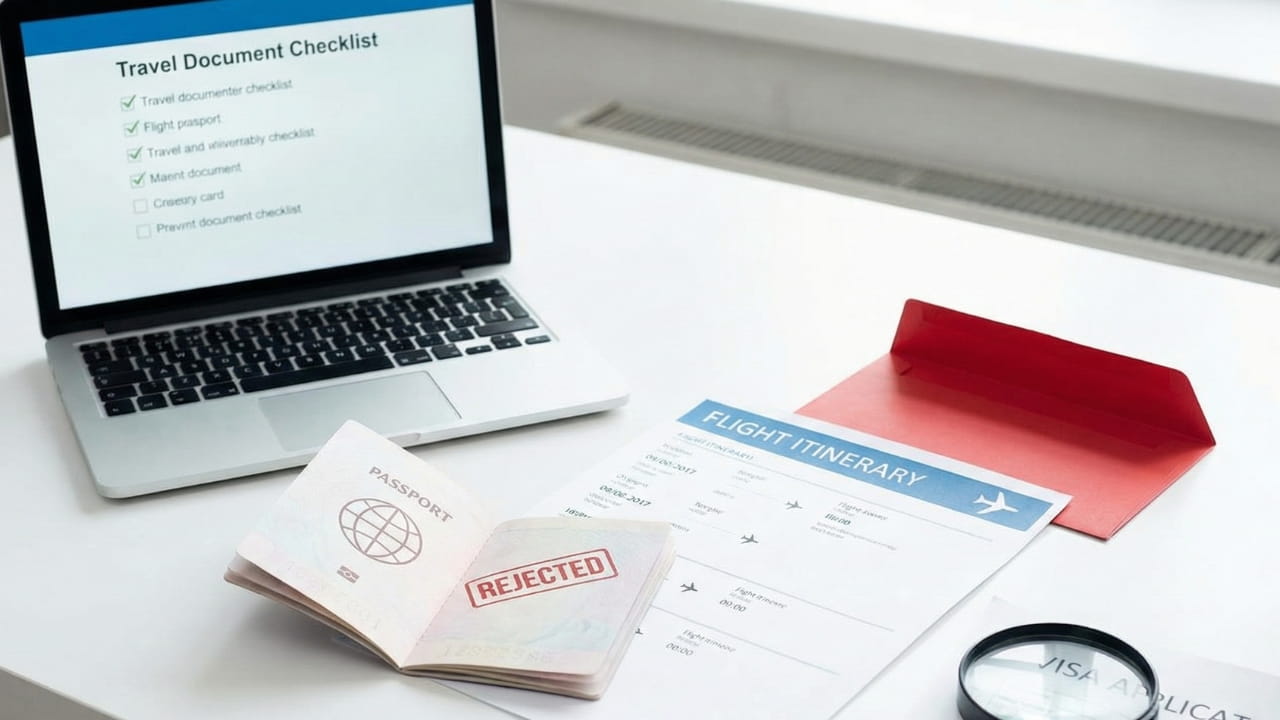
The Dilemma: You are filling out your Schengen or US visa application. The checklist asks for "Proof of Transport." The embassy website warns you in bold red letters: "Do not buy a flight ticket until your visa is approved."
But then, paradoxically, they demand to see a flight itinerary. So, what do you do?
Most travelers think they only have two options:
- Option A: Buy an expensive "Fully Refundable" ticket and pray you get your money back later.
- Option B: Rent a flight reservation (a "Dummy Ticket") for a small fee.
On the surface, Option A sounds safer. "It's refundable," you think. "I'll get 100% of my money back, so it's technically free, right?"
Wrong.
In this guide, we are going to expose the hidden math behind "fully refundable" tickets. We’ll show you why they are rarely "free" and how they can actually cost you hundreds of dollars in hidden fees, currency exchange losses, and credit card interest.
Option A: The "Fully Refundable" Trap
Let’s say you want to book a flight from New York to Paris. An Economy "Saver" ticket costs $600. But that ticket is non-refundable. If your visa is rejected, you lose $600.
So, you look at the "Fully Refundable" (Flex) option. The price jumps to $1,800 or $2,200. Airlines charge a massive premium for flexibility.
The "Hidden" Costs You Don't See
You assume that if you cancel, you get $2,200 back. Net cost = $0. But here is the reality of modern banking and airline policies:
- 1. The Currency Exchange Loss (3-5%): If you are booking in a foreign currency (e.g., booking a Lufthansa flight in Euros with a US credit card), your bank charges a conversion fee when you buy and when you refund. On a $2,000 ticket, you could lose $60 to $100 just on exchange rates.
- 2. The "Processing Fee": Many airlines and travel agencies deduct a "service fee" or "administrative fee" ($30-$50) that is non-refundable, even on Flex tickets.
- 3. The Cash Flow Freeze: Visa processing takes 15 to 45 days. That means your $2,200 is gone from your bank account for over a month. If you used a credit card, you might have to pay interest on that amount if the billing cycle closes before the refund arrives.
Warning: Refunds are not instant. Airlines often take 7 to 60 days to process a refund back to your card. Can you afford to have $2,000 missing from your account for two months?
Option B: The "Dummy Ticket" Strategy
A "Dummy Ticket" is not a fake document. It is a legitimate flight reservation made through a travel agency that places a "hold" on a seat for a specific period (usually 48 hours to 14 days).
Cost: Typically $15 to $35.
Why It Is Cheaper
It’s simple math. You pay a small, one-time fee to generate a valid PNR (Booking Reference). You submit this to the embassy. Once the visa decision is made, the reservation expires automatically.
You don't have to worry about refunds, cancellation policies, or checking your credit card statement every day. The $20 fee is a "sunk cost"—you pay it to buy peace of mind.
Head-to-Head Comparison
Let's look at the numbers for a hypothetical round-trip flight to Europe.
| Feature | Fully Refundable Ticket | Dummy Ticket Service |
|---|---|---|
| Upfront Cost | $1,800 - $2,500 | $15 - $35 |
| Money at Risk | $2,500 (until refunded) | $15 (total cost) |
| Hidden Fees | Currency conversion (~$80) Admin fees (~$30) |
None (Flat fee) |
| Refund Time | 14 - 60 Days | N/A (No refund needed) |
| Stress Level | High (Chasing refunds) | Low (Set and forget) |
When Should You Use Which?
Is a Dummy Ticket always the answer? Not necessarily. Here is how to decide:
Use a Fully Refundable Ticket IF:
- You are 100% sure you will travel on those exact dates.
- You have a high-limit credit card and don't care about floating the money.
- You are applying for a visa in a country known for extreme scrutiny (e.g., certain specific African nations applying to the UK), where paid tickets are sometimes explicitly requested.
Use a Dummy Ticket IF:
- You are applying for a standard Schengen, US, Canada, or Japan tourist visa.
- You want to save your cash for the actual trip.
- You aren't sure of your exact travel dates yet.
- You want to avoid the administrative headache of chasing airline refunds.
Conclusion: The "Free" Option Isn't Free
The allure of a "fully refundable" ticket is strong because it feels safe. But financially, it is inefficient. By the time you pay currency conversion fees and admin costs, you have likely spent more than the cost of a dummy ticket service, with significantly more hassle.
The Verdict: For 95% of visa applicants, renting a flight reservation is the cheaper, safer, and smarter choice. It satisfies the embassy requirement perfectly without holding your bank account hostage.
Save your money for the trip, not the application.

Leave a Comment